
wheel.me freed floor space, sourced parts in the U.S., and shipped robots through the network
wheel.me(opens in a new tab)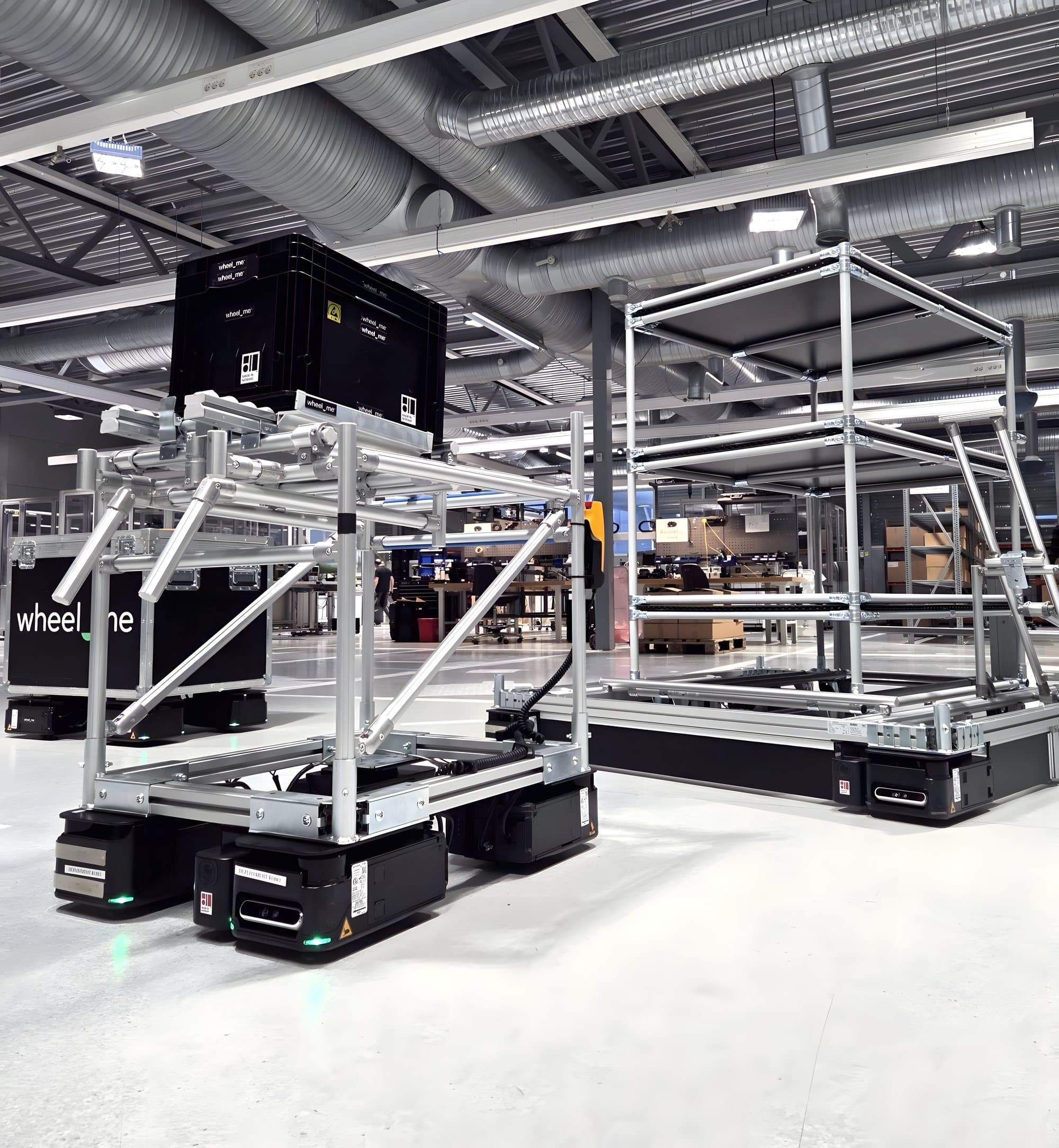
The short version
- Floor space back: a provider picked up inventory directly from wheel.me’s facility, freeing room for core operations.
- U.S. fabrication: a U.S. manufacturer produced robot parts on short timelines.
- Variable costs: storage and fabrication costs rise and fall with deployments.
Services used
- Manufacturing
- Logistics
wheel.me builds robotics that turn industrial carts, racks, fixtures, and other equipment into autonomous systems that can move anywhere. Most of its customers are industrial sites, where moving equipment without a person pushing it improves safety and throughput.
Rasmus Noraas Bendvold, wheel.me’s US Managing Director, wanted to grow in the U.S. without building new facilities, so the team could stay focused on deployments. A warehouse provider picked up inventory from wheel.me’s facility and stored it. A U.S. manufacturer made robot parts on short timelines. Parcel, LTL and white-glove carriers shipped the robots.
"Bloom helped us move faster without building a new facility from scratch. Their partners freed up space, produced parts quickly, and moved robots reliably."
What the network did for wheel.me
Storage and fulfillment
Racked and floor storage grows and shrinks with the deployment schedule. White-glove pickup keeps the team on installs, and inventory is as easy to reach as if it were still in-house.
U.S. fabrication on demand
A manufacturing provider in the network made wheel.me’s parts on short timelines, which kept installs moving and deployments consistent.
Shipping and delivery
Bloom coordinates the shipping: parcel for spares, LTL for kits, and white glove delivery for complete robots, with packaging designed to prevent damage so systems arrive ready to roll. The same 3PL providers can take on wider distribution as wheel.me grows.